What Happens During a Fotona Laser Treatments Session?
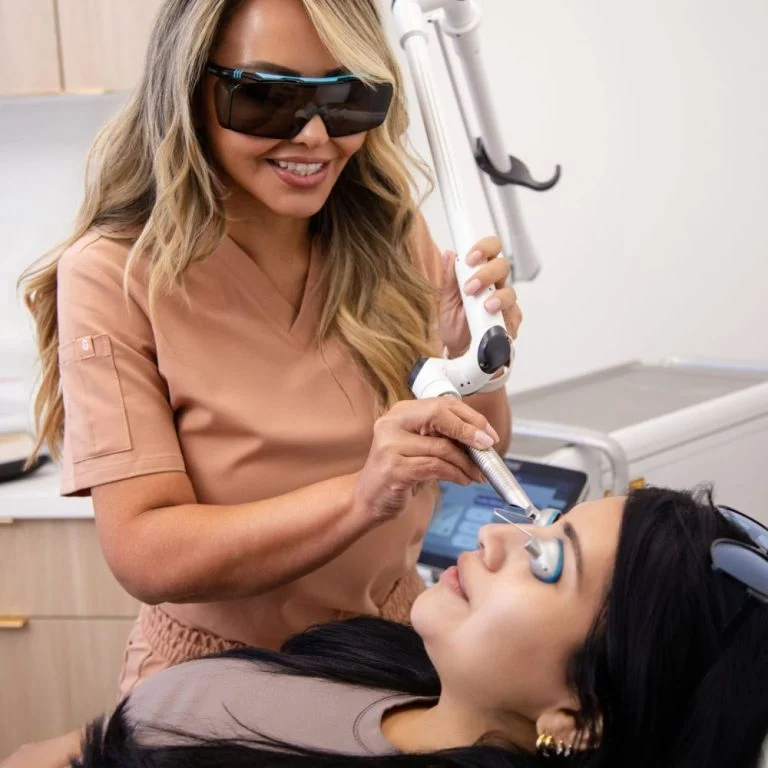
If you have been told that Fotona Laser Treatments might help with skin texture, acne scarring, pigmentation, fine lines, tightening, or even certain gynecologic and dental concerns, the next question is usually practical rather than technical: what actually happens during the appointment?
That is the right question to ask. Laser treatment sounds abstract until you are the one in the chair, goggles on, wondering how long it takes, whether it hurts, what the clinician is looking for, and why one patient walks out a little pink while another looks as if nothing happened at all.
Fotona is not one single treatment in the way a facial or peel might be. It is a laser platform with different wavelengths and treatment modes, most commonly erbium:YAG and Nd:YAG, which can be used alone or layered in the same visit. That matters because the session experience depends heavily on the goal. A gentle collagen-stimulating treatment for mild laxity feels and looks different from an ablative resurfacing session for acne scars. The broad outline is similar, though. Most appointments follow a clear sequence: consultation, skin prep, protective measures, the laser passes themselves, immediate cooling and aftercare, then a recovery period that reflects how aggressive the settings were.
Understanding that sequence makes the process less mysterious and helps you judge whether the treatment plan in front of you is sensible.
It starts before the laser is switched on
A proper Fotona appointment begins with assessment, not with treatment. In a well-run clinic, the clinician does not simply ask what bothers you and start firing pulses. They look at your skin type, recent sun exposure, medications, active breakouts, history of cold sores, scarring tendencies, and previous procedures. If the concern is facial rejuvenation, they also assess movement patterns, volume loss, laxity, and skin quality. Fine etched lines, for example, respond differently from deep folds caused by sagging or structural volume loss. A laser may improve the surface and stimulate collagen, but it does not replace every other modality.
This is also where expectations are calibrated. One of the most common misunderstandings around Fotona Laser Treatments is the assumption that every session produces dramatic downtime and dramatic change. Sometimes it does. Often, especially in the collagen-building category, the improvements are cumulative and subtle at first. Better texture, more glow, a firmer feel, less creasing under certain light, these are real outcomes, but they are not always immediate.
The consultation usually covers practical exclusions as well. Recent tanning, isotretinoin use in some cases, active infection, open skin lesions, or poorly controlled inflammatory skin conditions can lead to postponement. If a patient has a history of herpes simplex around the mouth and the treatment area is near the lips, antiviral prophylaxis may be recommended. That detail is easy to overlook, yet it can make the difference between a straightforward recovery and an unpleasant flare.
Photos are often taken before the session. Some people dislike this part, but it is useful. Laser results can be gradual, and memory is unreliable. Patients often forget how much baseline redness, roughness, or shadowing they started with.
The room setup is more methodical than dramatic
People tend to imagine lasers as cinematic, bright flashes and a lot of noise. In reality, the room usually feels calm and procedural. The handpieces are prepared, the settings are confirmed, and eye protection is non-negotiable. Everyone in the room wears the appropriate goggles or metal eye shields, depending on the area being treated. If treatment is close to the eyes, internal corneal shields may be used by trained professionals. That can sound intimidating, but it is standard safety practice for periocular work.
The skin is cleansed thoroughly to remove oil, sunscreen, makeup, and debris. For some treatments, a topical anesthetic is applied and left on for roughly 20 to 45 minutes. For lighter Nd:YAG tightening sessions, many patients do not need numbing cream. For more intensive erbium resurfacing, numbing is common and often helpful. In a few cases, especially deeper resurfacing or large treatment areas, clinics may also use cooling devices, distraction methods, or local anesthesia.
At this stage, the clinician may mark anatomical zones or areas of focus. Around the mouth, under the eyes, along acne scar bands, or over more lax lower face tissue, the energy delivery might be adjusted slightly to match the tissue thickness and treatment goal. Good laser work is not paint-by-numbers. It is patterned, deliberate, and responsive to what the skin is showing in real time.
What the treatment itself feels like
Once the session begins, the sensation depends on the laser mode. Patients often describe Nd:YAG passes as a warming, snapping, or rubber-band feeling that builds heat in the tissue. Erbium:YAG resurfacing tends to feel sharper and more intense, especially if the treatment is ablative. There is often a distinct smell during ablative passes, caused by microscopic vaporization of skin tissue. It is not glamorous, but it is normal.
One practical point that surprises first-time patients is that not every pass looks dramatic. Some of the most useful collagen-stimulating work happens beneath the surface and does not create obvious frosting or bleeding. Other passes, especially more aggressive resurfacing, create visible pinpoint ablation, redness, and tissue whitening that the clinician interprets as treatment endpoints.
The session itself may be quick or fairly involved. A focused periocular treatment might take 15 to 20 minutes once numbing is complete. A full-face treatment with multiple modes can take closer to 45 minutes, sometimes more. When protocols combine intraoral and external passes, such as certain tightening approaches, the treatment can feel especially unusual because some of the work is done inside the mouth to target tissue from another angle. Patients are often startled by that concept at first, yet it is one of the features that gives Fotona systems their flexibility.
Why many sessions are done in layers
One reason Fotona Laser Treatments have developed a strong reputation in aesthetic medicine is that the platform allows layered treatment. Rather than relying on one kind of energy effect, clinicians can stack different passes to address several tissue depths.
A common example is a rejuvenation session that begins with deeper bulk heating using Nd:YAG, followed by a more superficial resurfacing or polishing step with erbium:YAG. The deep phase is aimed at collagen remodeling and tightening. The superficial phase improves texture, pore appearance, and dullness. Patients sometimes think of this as one treatment with one sensation, but from the operator’s perspective it is more like a sequence of related maneuvers, each chosen for a specific purpose.
This layered approach is useful, but it also means that the phrase “I had a Fotona session” does not tell you enough to predict downtime or results. A low-downtime lunchtime protocol is not the same as a stronger resurfacing session just because both use the same brand platform.
A typical session, step by step
For most facial indications, the rhythm of the appointment looks something like this:
- The clinician reviews your history, confirms there has been no recent sunburn, infection, or other new contraindication, and takes baseline photos if needed.
- Your skin is cleansed, numbing cream may be applied, and protective eyewear or shields are placed.
- The laser is performed in one or more passes, with settings tailored to the treatment goal and your skin response.
- Cooling, soothing products, and aftercare instructions are provided immediately after the last pass.
- You leave with a clear recovery plan, expected downtime range, and timing for follow-up or repeat sessions.
That sequence is simple on paper, but the quality lies in the judgment between each step. The clinician watches for excessive heat, patchy response, patient discomfort, and any sign that the skin is reaching its endpoint earlier than expected.
What the clinician is watching while treating you
Patients understandably focus on what they feel. Clinicians focus on what they see. During a session, they monitor erythema, edema, tissue whitening, heat buildup, overlap, and response uniformity. The exact endpoint varies by mode and indication. Mild redness may be enough for a gentle tightening treatment. A resurfacing pass may intentionally create a more visible endpoint.
This matters because competent laser treatment is not just about selecting a preset. Skin is not static. One cheek may react faster than the other. Thin eyelid skin cannot be treated like the forehead. Freshly tanned skin behaves differently from untanned skin. Areas with old acne scars can require a more nuanced pattern than smooth skin nearby.
Experienced operators also pay attention to patient feedback. If someone with numbing cream says a particular region suddenly feels much sharper than expected, that can indicate reduced anesthetic effect, a denser nerve distribution, or a tissue response that warrants adjustment. Laser safety is not only about avoiding major complications. It is about constantly matching intensity to tissue behavior.
Does it hurt?
The honest answer is that it can, but the degree varies widely. A gentle non-ablative tightening session may be entirely tolerable with only brief moments of heat. A stronger erbium resurfacing treatment can be quite spicy even with numbing, particularly around the mouth, nose, and under-eye region. Most patients tolerate it well when they know what is coming and the treatment is broken into manageable zones.
Pain expectations are one area where marketing often gets too polished. If someone tells you every Fotona treatment is completely painless, treat that with skepticism. Some are easy. Some are not. The better question is whether the discomfort is brief, controllable, and worthwhile for the intended result. In many cases, yes. But it should be described honestly.
A practical comparison helps. Many patients rate lighter Fotona sessions as easier than microneedling radiofrequency and somewhat more intense than a mild IPL treatment. More aggressive resurfacing may rival medium-depth peels or exceed them in certain areas. Those comparisons are imperfect, but they are closer to reality than generic reassurance.
What you look like right after
The mirror check at the end depends on the treatment depth. After a mild collagen-stimulating session, the skin may look pink, a little puffy, and slightly warm, almost like exercise flush. That can settle within hours to a day. Makeup might be possible the next day, sometimes the same day if the skin surface is intact and your clinician approves it.
After stronger erbium resurfacing, the immediate appearance can be more pronounced. Expect redness, swelling, a sunburn-like sensation, and sometimes a grid-like or bronzed texture as the skin begins healing. Over the next few days, the treated surface may feel rough, dry, or sandpapery before it sheds. Patients are often most anxious not when the skin is red on day one, but around the day three to five period, when healing is obvious and social plans suddenly seem poorly timed.
This is where good counseling matters. If the clinic describes every treatment as no-downtime, patients can feel blindsided by a perfectly normal recovery.
The aftercare is not complicated, but it matters
For most facial treatments, the immediate home plan is built around gentle cleansing, a bland moisturizer or healing ointment if indicated, strict sun protection, and avoiding heat, friction, or irritating actives until the skin barrier has recovered. Retinoids, exfoliating acids, and strong vitamin C products are usually paused for several days, sometimes longer depending on intensity.
A practical aftercare checklist often includes these points:
- Keep the treated skin clean, cool, and well moisturized with products your clinic recommends.
- Avoid direct sun, hot yoga, saunas, intense exercise, and swimming pools for the period advised.
- Do not pick, scrub, or force peeling skin to come off faster.
- Hold retinoids, exfoliants, and potentially irritating skincare until the skin feels fully settled.
- Contact the clinic if you develop unusual blistering, worsening pain, pus, or signs of infection.
That may sound basic, but aftercare is where many preventable issues start. The classic example is the patient who feels better on day two, resumes active skincare too early, and turns expected post-laser sensitivity into prolonged irritation.
How recovery actually unfolds
Recovery is rarely a straight line. There is the first inflammatory phase, where the skin is pink, warm, and perhaps swollen. Then comes the transition phase, where roughness, dryness, bronzing, or micro-crusting may appear. Finally, there is the reveal phase, when the old surface sheds and fresher skin becomes visible. For lighter treatments, this cycle can be short and subtle. For more aggressive sessions, it is more visible and lasts longer.
A rough timeline for common facial sessions might look like this. Mild treatments can settle within 24 to 72 hours. Moderate resurfacing often takes several days to a week before patients feel socially comfortable without planning around redness. Stronger ablative work can require a week or more of visible healing, with residual pinkness lasting longer in fair or reactive skin.
One point worth stressing is that collagen remodeling continues long after the skin surface appears healed. The early glow can come from exfoliation and edema. The more meaningful structural improvements, firmness, softening of fine lines, better texture, often develop over weeks to months. This delayed payoff is why a skilled provider spaces sessions rather than chasing immediate visible change with unnecessary intensity.
Results are tied to the indication, not just the machine
People sometimes ask whether one Fotona session is enough. For a special event glow or a mild textural refresh, maybe. For acne scars, laxity, established wrinkles, or pigment that has been building for years, one session is usually a starting point, not the whole course.
That is not upselling by default. It is tissue biology. Acne scars, for instance, involve structural changes in the dermis. Laxity reflects collagen and elastin changes that accumulated over time. A laser can stimulate repair, but repair happens in increments. In practice, many treatment plans involve a series, often three to five sessions for non-ablative or mixed protocols, with maintenance afterward. More aggressive resurfacing may require fewer sessions but more downtime.
The trade-off is straightforward. Lower downtime usually means more sessions. Higher intensity may reduce the number of sessions but increases recovery and risk. Neither path is inherently better. The right choice depends on the condition being treated, skin type, lifestyle, and tolerance for downtime.
Who tends to do well, and who should be cautious
Patients who do best are usually those with realistic expectations, consistent sun protection habits, and a willingness to follow the recovery plan. They understand that improvement can be visible without being theatrical. They also accept that lasers improve a lot of things, but not everything. Deep static folds may still need volume restoration. Significant skin laxity may exceed what a non-surgical treatment can reasonably deliver. Persistent pigment in darker skin types may require a conservative strategy to reduce the risk of post-inflammatory hyperpigmentation.
Caution is especially important in patients with recent tanning, melasma-prone skin, active inflammatory conditions, or a history of problematic pigmentation after injury. That does not always rule out Fotona Laser Treatments, but it may change timing, settings, pre-treatment skin conditioning, or whether laser is even the best first option.
This is one of the more important signs of a thoughtful clinic: they are willing to say no, not yet, or not this way.
A few details patients are glad they knew beforehand
The smell during ablative treatment is normal, though not pleasant. The face can feel hot for a few hours afterward, and sleeping with the head elevated the first night can reduce swelling. Around the https://www.google.com/maps?cid=15747598012322768060 eyes, puffiness often looks worse the morning after before it improves. Around the mouth, healing can feel tighter and more uncomfortable because that area moves constantly. If you are prone to flushing, the residual redness may linger longer than your friend’s even when the treatment was identical.
Another useful point is scheduling. It is usually wiser to book stronger sessions when you have a buffer before major events. Not because something will necessarily go wrong, but because healing has its own pace. I have seen patients insist on resurfacing five days before a wedding or photo session, then spend the week bargaining with their mirror. A safer margin is often the difference between confidence and regret.
What a good session feels like, beyond the physical part
A well-executed laser appointment has a certain rhythm. The consultation is specific. The settings are explained in plain language. The discomfort is acknowledged, not dismissed. The clinician checks in during treatment, adjusts when necessary, and gives aftercare that matches the intensity used. You leave knowing what is normal, what is not, and when your result is likely to reveal itself.
That level of clarity matters because Fotona is a powerful platform, not a magic wand. The treatment can be elegant and effective, but the outcome depends on indication, operator skill, conservative judgment, and patient follow-through. The session itself is only part of the story. Preparation, technique, and recovery are what turn a laser appointment from a generic procedure into a good result.
For most patients, the experience is less frightening than expected and more nuanced than advertised. There is no single template for what happens during Fotona Laser Treatments, but there is a reliable pattern: careful assessment, tailored energy delivery, short-term skin response, then a recovery period that leads to gradual improvement. Once you understand that pattern, the treatment stops feeling mysterious and starts feeling like what it is, a medical procedure with clear steps, real variables, and results that reward good planning.
OMNIA Wellness Center
Address: 16430 Ventura Blvd Ste 207, Encino, CA 91436
Phone number: +18183868511
FAQ About Fotona Laser Treatments
What is a Fotona laser good for?
A Fotona Laser system is a versatile, dual-wavelength medical laser used primarily for non-surgical skin tightening, anti-aging rejuvenation, and dermatological treatments.
How much does the Fotona laser cost?
The cost of a Fotona laser depends heavily on whether you are looking to purchase a laser machine for a medical practice or are a patient seeking a laser treatment at a medspa.
Is a Fotona laser worth it?
A Fotona laser treatment is generally worth it if you want non-surgical skin tightening, improved texture, and collagen stimulation with very little downtime.